

Affiliate Disclosure: This post contains affiliate links. If you purchase through them, we may earn a small commission at no extra cost to you. We only recommend products we believe in.
Table of Contents
- Why You Keep Waking Up at 3 AM
- The Science Behind Your Sleep Cycle
- The Cortisol Problem Nobody Talks About
- Blood Sugar, Alcohol, and Your 3 AM Sleep Wakeup Fix
- 7 Proven Ways to Stop Waking Up at Night
- What Makes a Natural Sleep Supplement Actually Work
- Recommended Solution: Yu Sleep
- A 7-Day Sleep Reset Plan
- When to See a Doctor About Sleep
- FAQs
If you are lying awake at 3 AM right now, staring at the ceiling with your brain already running, this article is for you.
A 3 AM sleep wakeup fix is not complicated once you understand what is actually causing it. Your body is not broken. Something specific is pulling you out of sleep at that exact hour, and once you know what it is, you can fix it.
This guide covers the physiology behind it, seven actionable steps to stop it, and the best natural sleep supplement designed specifically for people who fall asleep fine but cannot stay that way.
1. Why You Keep Waking Up at 3 AM
The 3 AM wakeup has a name in sleep research: nocturnal awakening. It is one of the most commonly reported sleep complaints, and it almost always has the same cluster of causes.
You are not a light sleeper by nature. Something in your biology is misfiring in a very specific window.
Here is what makes 3 AM the weak point in your night:
- Your sleep naturally gets lighter after four to five hours
- Deep sleep stages are mostly finished by then
- Your body begins its slow transition toward morning
- Stress hormones, blood sugar dips, and temperature shifts all hit hardest in this window
The good news is that each of those triggers is addressable. That is exactly what this article covers.
2. The Science Behind Your Sleep Cycle
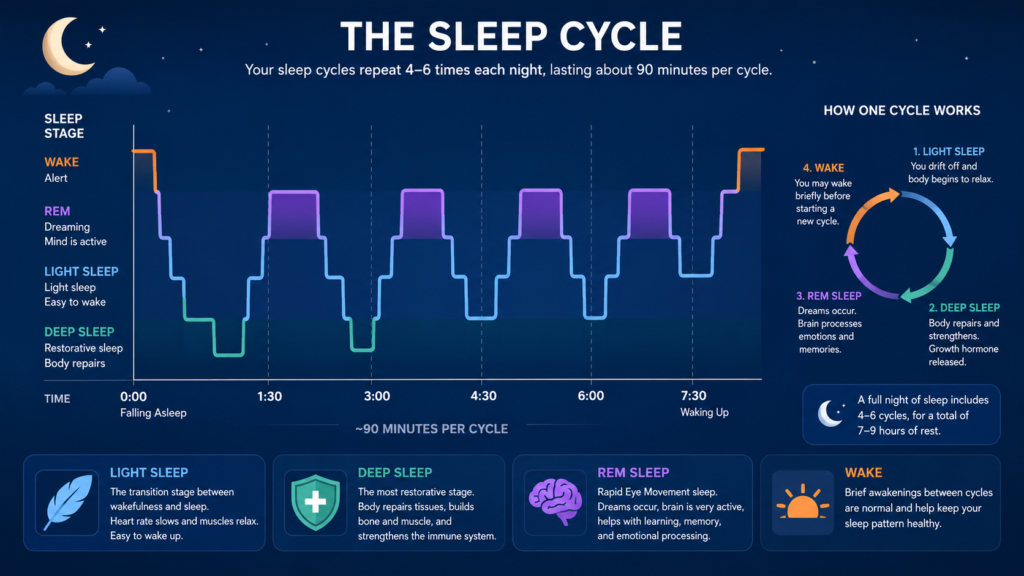
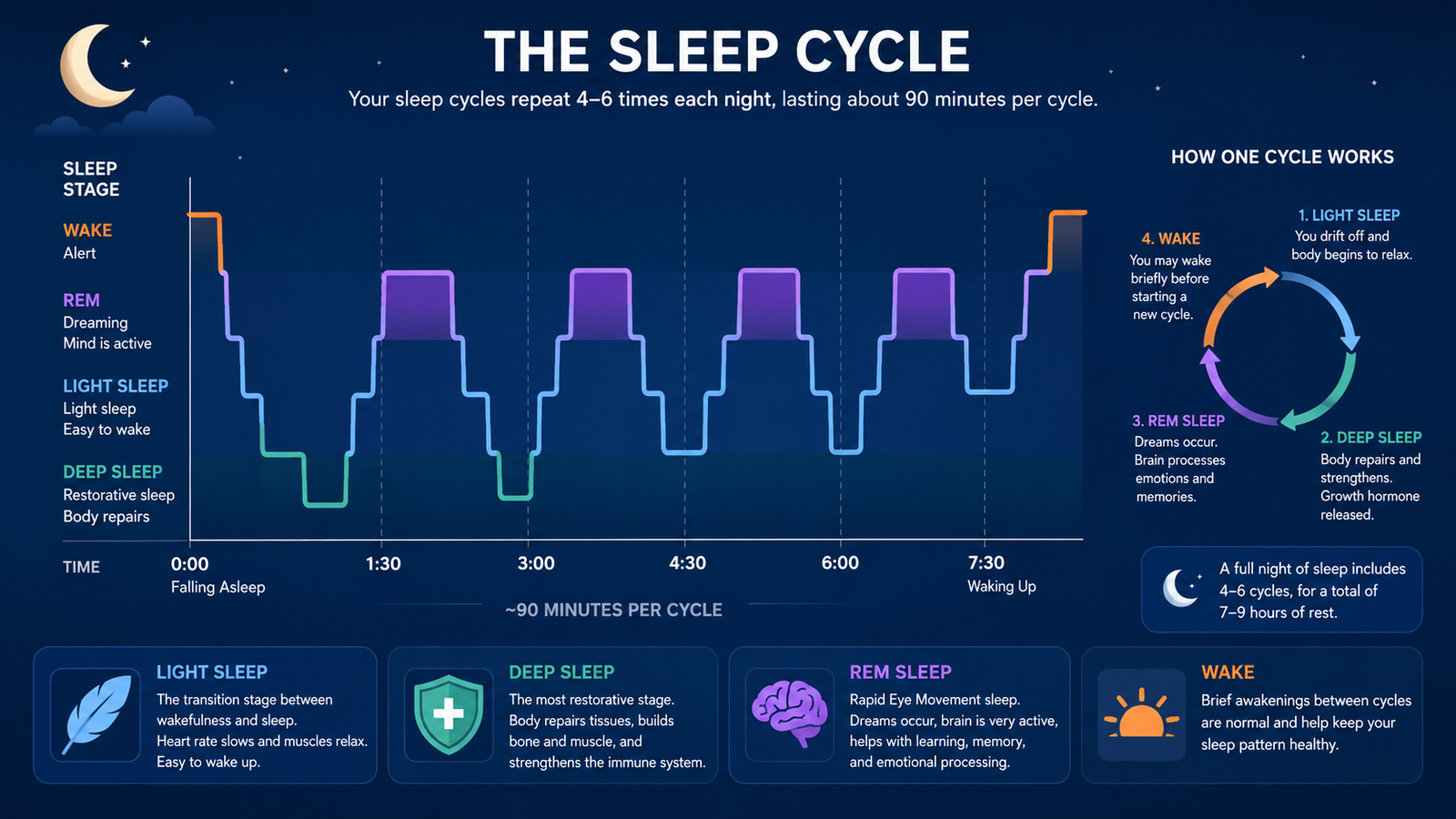
Sleep runs in 90-minute cycles. Each cycle moves through three stages.
Stage 1 and 2 (Light Sleep): Your body slows down, temperature drops, and your brain starts to quiet.
Stage 3 (Deep Sleep): This is where physical repair happens. Growth hormone releases. Your immune system does its best work here.
REM Sleep: Your brain processes emotional memory, consolidates learning, and runs through the day’s experiences.
By 3 AM, most people have completed the majority of their deep sleep. What remains is lighter sleep and longer REM periods. Any disruption in this window, from cortisol, blood sugar, temperature, or stress, pushes you straight into full wakefulness.
This is why a 3 AM sleep wakeup fix needs to target the specific mechanisms active in that window, not just general sleep quality.
3. The Cortisol Problem Nobody Talks About
Cortisol is your wake-up hormone. It rises naturally in the morning to help you feel alert and ready to move.
In a healthy sleep pattern, cortisol stays low until around 6 AM. But in people dealing with chronic stress, the cortisol curve shifts forward. It starts rising at 2 or 3 AM instead.
Your brain reads that early cortisol spike as a signal to wake up. Your heart beats slightly faster. Your thoughts start moving. Going back to sleep feels impossible even though you are exhausted.
This is called an advanced cortisol curve, and it is one of the most common and most overlooked causes of early morning wake-ups.
What drives early cortisol spikes:
- Ongoing work or financial stress
- Disrupted sleep patterns from shift work or irregular schedules
- Too much caffeine late in the day
- Alcohol in the evening
- Overtraining without adequate recovery
- Adrenal fatigue from extended stress periods
Fixing your 3 AM sleep wakeup means addressing cortisol directly, not just your sleep habits.
4. Blood Sugar, Alcohol, and Your 3 AM Sleep Wakeup Fix
Two of the most common and most avoidable causes of 3 AM wake-ups are blood sugar drops and alcohol metabolism.
Blood Sugar and Sleep
When you go to bed after a late heavy meal or skip dinner entirely, your blood sugar can drop significantly in the early morning hours. That drop triggers a stress response. Your body releases a small burst of adrenaline and cortisol to stabilize blood sugar, and that burst wakes you up.
A small snack with protein and complex carbs before bed, such as a handful of nuts with a piece of fruit, can stabilize blood sugar through the night and prevent that stress response from firing.
Alcohol and Sleep Architecture
Alcohol is a sleep disruptor that disguises itself as a sleep aid. It creates initial sedation but fragments sleep heavily in the second half of the night. As your liver metabolizes it, your body temperature rises, your sleep grows lighter, and cortisol begins releasing earlier.
Many people who drink in the evening wake consistently between 2 and 4 AM without connecting the two. Cutting alcohol out for two weeks is one of the fastest ways to test whether it is driving your 3 AM wakeups.
5. Seven Proven Ways to Fix Your 3 AM Sleep Wakeup
These steps are ordered by impact. Start with the first two and add the rest over a week.
Fix 1: Lock In a Consistent Wake Time
Your wake time anchors your entire circadian rhythm. When you sleep in on weekends or vary your wake time by more than an hour, your circadian clock drifts. That drift disrupts the cortisol curve and makes early morning wake-ups more likely.
Pick a wake time and hold it every day for two weeks. Your sleep architecture will start to stabilize around it.
Fix 2: Lower Your Bedroom Temperature
Core body temperature needs to drop for you to enter and stay in deep sleep. A room that is too warm prevents that drop and increases the chance of waking in the lighter sleep stages.
Set your room between 65 and 68 degrees Fahrenheit. If you cannot control the room temperature, a cooling mattress pad or breathable bedding achieves a similar result.
Fix 3: Cut Off Screens One Hour Before Bed
Blue light from phones, tablets, and laptops suppresses melatonin production. Your brain needs melatonin to initiate and maintain sleep. Cutting screens an hour before bed gives your melatonin levels time to rise naturally before you get into bed.
This single change improves sleep quality for most people within three to five days.
Fix 4: Stabilize Blood Sugar Before Bed
Have a small snack with protein and slow-release carbs thirty minutes before bed if you tend to wake in the night. Avoid eating heavily within two hours of sleep, and avoid alcohol within three hours.
Fix 5: Add Magnesium Glycinate
Magnesium is directly involved in GABA activity, cortisol regulation, and sleep cycle completion. Most adults are deficient in magnesium, and that deficiency shows up most clearly as fragmented sleep and early morning wake-ups.
Magnesium glycinate is the most bioavailable form. Take 300 to 400mg at dinner or before bed. Most people notice a difference within five to seven days.
Fix 6: Manage Stress During the Day, Not at Bedtime
Trying to relax at 10 PM after a high-stress day is too late. Cortisol does not disappear just because you got into bed. It needs to be processed during the day.
Daily habits that genuinely lower cortisol include:
- 20 to 30 minutes of moderate exercise in the morning or early afternoon
- 10 minutes of breathing exercises or meditation in the afternoon
- Reducing caffeine after 1 PM
- Getting outside for natural light exposure during the day
Fix 7: Use a Natural Sleep Supplement Built for Sleep Maintenance
If the first six steps have not fully closed the gap, the issue is likely biochemical. A well-formulated natural sleep supplement can address the GABA, cortisol, and melatonin pathways that lifestyle changes alone cannot always reach.
This is where Yu Sleep comes in.
6. What Makes a Natural Sleep Supplement Actually Work
Not all sleep supplements address the same problem. Most are built for sleep onset, helping you fall asleep faster. Very few are designed for sleep maintenance, staying asleep through the 3 AM window.
A sleep supplement built for the 3 AM sleep wakeup fix needs to target three things:
| Target | Why It Matters | Key Ingredients |
|---|---|---|
| Cortisol regulation | Early cortisol spikes wake you up | Ashwagandha, phosphatidylserine |
| GABA support | Low GABA causes fragmented sleep | L-Theanine, magnesium glycinate |
| Sleep cycle completion | Protects REM and deep sleep stages | Passionflower, low-dose melatonin |
The Role of Nano-Enhanced Delivery
Standard supplements often have poor absorption rates. A large portion of the active compound passes through your system before it can be used. Nano-enhanced delivery uses smaller particle sizes to cross biological barriers more efficiently, including the blood-brain barrier.
The result is more consistent effects at lower doses, with fewer side effects than high-dose standard formulas.
7. Recommended Solution: Yu Sleep
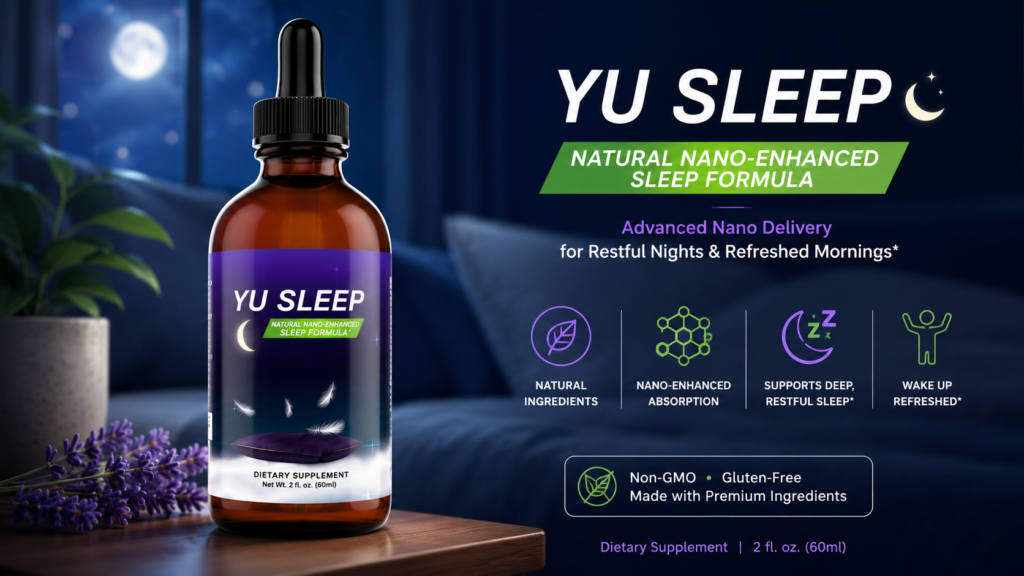
Yu Sleep is an all-natural nano-enhanced sleep formula built specifically for people who fall asleep fine but keep waking up in the night.
What it targets:
- Cortisol spikes in the early morning window
- GABA deficiency that causes fragmented sleep
- Incomplete sleep cycles that leave you unrestored
What makes it different:
- Plant-based ingredients with clinical research behind each one
- Nano-enhanced delivery for better absorption and consistent results
- No high-dose melatonin that suppresses natural production
- No grogginess the morning after
- Delicious formula you actually want to take
Key ingredients include:
- Ashwagandha for cortisol regulation and stress response reduction
- L-Theanine for GABA support and calm without sedation
- Magnesium Glycinate for sleep cycle completion and cortisol balance
- Passionflower for sleep continuity and anxiety reduction
- Low-dose Melatonin for circadian synchronization without suppression
Most users report noticeable improvement in sleep continuity within the first week. Full results typically show across three to four weeks of consistent use.
Try Yu Sleep and stop the 3 AM wakeup for good.
8. A 7-Day Sleep Reset Plan
Here is a simple one-week plan to implement everything in this article without overwhelming yourself.
| Day | Action |
|---|---|
| Day 1 | Set a fixed wake time and hold it all week |
| Day 2 | Lower bedroom temperature to 65 to 68 degrees |
| Day 3 | Cut alcohol and heavy meals three hours before bed |
| Day 4 | Add a 20-minute no-screen wind-down before bed |
| Day 5 | Start magnesium glycinate at dinner |
| Day 6 | Begin tracking sleep: onset time, wake-ups, morning energy |
| Day 7 | Add Yu Sleep and commit to four weeks |
Track your progress each morning. Write down how long it took to fall asleep, how many times you woke up, and how you felt two hours after rising. You will see the pattern shifting within the first week.
9. When to See a Doctor About Sleep
Most 3 AM wake-ups respond to the strategies above. But some situations need medical attention.
See a doctor if:
- You wake up gasping or choking, which can indicate sleep apnea
- Daytime fatigue does not improve after six weeks of consistent habit changes
- You experience a racing heart, chest tightness, or sweating during night wake-ups
- Sleep disruption started after beginning a new medication
- You are postmenopausal, as hormonal changes are a common and treatable cause
For more on sleep disorders and when to seek clinical help, the Sleep Foundation and National Institutes of Health sleep resources are reliable starting points.
FAQs
What is the most effective 3 AM sleep wakeup fix?
The most effective approach combines a consistent wake time, blood sugar stabilization before bed, cortisol management during the day, and a natural sleep supplement that supports GABA and cortisol pathways. Yu Sleep addresses the biochemical side of this combination directly.
Why do I wake up at exactly 3 AM every night?
Your sleep architecture means that by 3 to 4 AM, you are in your lightest sleep stage of the night. Any stress hormone spike, blood sugar drop, or temperature change in that window pushes you into full wakefulness. The consistency of the timing is your body’s circadian rhythm, not a coincidence.
Is waking up at 3 AM a sign of anxiety?
Often, yes. Anxiety keeps cortisol elevated, and an elevated cortisol baseline shifts the wake-up window earlier. Addressing stress during the day through exercise, breathwork, and adaptogenic supplements tends to move cortisol back to its proper morning rise.
Does melatonin help with 3 AM wake-ups?
Not reliably. Melatonin supports sleep onset but has minimal effect on sleep maintenance. High-dose melatonin taken regularly can also reduce your body’s natural production over time. A formula targeting GABA and cortisol, like Yu Sleep, is more appropriate for the 3 AM problem specifically.
How long does it take to stop waking up at 3 AM?
Most people notice improvement within one to two weeks of consistent habit changes. Adding a targeted natural supplement like Yu Sleep tends to accelerate that timeline. Full stabilization of the sleep pattern typically takes four to six weeks.
Can I read more about sleep science and circadian rhythms?
Yes. The American Academy of Sleep Medicine and Sleep Foundation both publish accessible, research-backed content on sleep physiology, circadian biology, and sleep disorders.
The Bottom Line
A 3 AM sleep wakeup fix is not about trying harder to sleep or taking a stronger sedative. It is about understanding the specific biological mechanisms active in that early morning window and addressing each one directly.
Cortisol regulation, blood sugar stability, GABA support, room temperature, light exposure, and sleep cycle protection all play a role. When you stack the right habits with the right nutritional support, the 3 AM wakeup stops.
Yu Sleep is the supplement built specifically for this problem. No grogginess, no dependency, no high-dose melatonin. Just a plant-based, nano-enhanced formula that works with your body’s natural systems to keep you asleep through the night.
If you are serious about fixing your sleep, start the 7-day plan today and add Yu Sleep to your routine.
Start sleeping through the night with Yu Sleep.